Jump to content


Blogs

Backpacking and Hiking Jargon: Postholing (Snow)

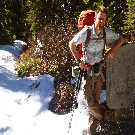
One of the least enjoyable methods of snow travel, postholing is the usually unplanned effect of your foot falling through the outer surface of the snow and sinking to the knee or farther. The result is a deep hole in the snow as if it had been dug by a posthole digger prior to placing a post in the ground. Travel in this manner is quite difficult, requiring large amounts of energy while testing a hiker’s patience. Postholing in deep snow makes for difficult and strenuous travel.

Aaron Zagrodnick

Aaron Zagrodnick in Technique

Backpacking and Hiking Jargon: Terrain Association

Terrain association is a backcountry navigation process by which one can navigate and determine their position using a map, by evaluating terrain features seen on the map, and matching up what you’re seeing in the field to the map. The method when used alone can be described as “approximately precise”. By orienting yourself and the map to a specific direction – north for example – that jagged peak directly to the west, the river in the valley below, combined with the small hill on your right for

Aaron Zagrodnick

Aaron Zagrodnick in Technique

Oasis in the Desert: Hiking & Exploring Coyote Gulch

The Grand Staircase-Escalante National Monument is a huge and spectacular park in southern Utah, and while many hikes in the area have become quite popular and are often well documented, this doesn’t mean these hikes don’t come without a set of – sometimes unexpected – challenges. As we drove down the dusty back roads of Utah towards a remote trailhead to begin our backpacking trip of Coyote Gulch in April 2014, I was blissfully unaware that I’d soon find out firsthand some of the challenges tha

Steve Ancik

Steve Ancik in Trips

Backpacking and Hiking Jargon: Fabric Hydrostatic Head

At what point will it leak? In the outdoor industry, hydrostatic head (often abbreviated as HH) is a measure of the waterproofness of a particular fabric, most applicable to the fly of a shelter, canopy, and / or floor materials, as well as rain gear. The measurement reflects how high a column of water a secured piece of fabric could support before leakage occurs. This column of water is measured in millimeters, and the test is performed with a special machine or apparatus that applies water pre

Aaron Zagrodnick

Aaron Zagrodnick in Gear

Distant Corners: Hiking the Oklahoma & Texas Panhandles

Lines drawn on a map are peculiar. Sometimes they follow terrain features and make complete sense. Oklahoma and Texas, for instance, are divided both politically and geographically by the Red River, a natural enough line of separation although its shifting, serpentine course has made boundary disputes a regular thing. Other lines are more confusing, and seemingly arbitrary. One example is the region containing the “panhandles” of these two states. Oklahoma’s panhandle is a strip of la

Susan Dragoo

Susan Dragoo in Trips

Backpacking Jargon: What Are Backpack Load Lifters?

Load lifters are adjustable straps running from the top of each shoulder strap to the top part of the pack body (and ideally to the top of the frame) on many packs designed for overnight carry and beyond. By tightening these straps, the top of the pack is prevented from sagging backwards and a more efficient weight transfer to the hipbelt is achieved by removing weight from the shoulders. An angle of about 45 degrees (running upwards from the shoulder strap to the pack body attachment point) is

Aaron Zagrodnick

Aaron Zagrodnick in Gear

Backpacking and Hiking Jargon: Shoe Stack Height

With footwear being one (and especially important) component of a successful and enjoyable hike, it can pay to become a bit more familiar with the terminology used to define and classify all the choices that are out there. When it comes to stack height, this is a specific measurement of the distance of the bottom of your foot from the ground and overall height of the shoe underfoot. Generally when comparing footwear in a similar class, most of the differences in stack height will be in the form

Aaron Zagrodnick

Aaron Zagrodnick in Gear

Trail Tip: Backpacking Freeze Dried Meal Fill Lines

Why every freeze dried meal out there doesn’t already have a fill line on the packaging is a bit of mystery, but luckily we can memorize our own. For example, most Mountain House meals call for either 1 ⅓, 1 ½, or 1 ¾ cups of boiling water. Instead of having to precisely (or imprecisely) measure out that exact amount of water to boil, or worse yet attempt the dreaded cups to milliliters conversion without the help of the internet in the backcountry, we can remember and make our own specific fill

Aaron Zagrodnick

Aaron Zagrodnick in Food

Hiking the Hoodoos & Badlands of Northwestern New Mexico

In the San Juan Basin of northwestern New Mexico, there are several incredible badlands and hoodoo areas, such as the Lybrook and Burnham Badlands, the Fossil Forest, and the Bisti/De-Na-Zin, Ojito, and Ah-Shi-Sle-Pah wilderness areas along with several others. I have had the pleasure to visit, hike, and photograph the first four listed above. These badlands, mostly managed by the Bureau of Land Management (BLM), feature many bizarre and wonderful hoodoos and rock formations, from tiny mushroom

Steve Ancik

Steve Ancik in Trips

Backpacking the Henrys Lake Mountains of Idaho & Montana

A few drops of rain and an empty parking lot greeted us at the trailhead where we paused for a few moments of contemplation. I’m not sure if I was more nervous about the responsibility of backpacking with a dog for the first time or if my girlfriend was more nervous about Lolo and I spending the weekend in grizzly country without her there to supervise. Lolo just seemed excited and happy, which were contagious emotions and aside from occasional hunger and tiredness proved to be the definitive fe

Mark Wetherington

Mark Wetherington in Trips

Apple Crisp Backpacking Dessert Recipe

Fall is in the air. The nights are getting crisp and the moist leaves on the ground have a pleasant and earthy odor. It is a wonderful time loved by many backpackers. Here’s a quick and simple yet yummy dessert that conjures up visions of autumn. Apples, cranberries, and cinnamon spice….all flavors of the fall. This backcountry apple crisp is a tasty treat for two or a decadent dessert for one. This backpacking dessert is a perfect complement for chilly fall weather. Apple Crisp

PaulMags

PaulMags in Food

Towering Beauty: The Wahweap Hoodoos of Southern Utah

Grand Staircase-Escalante National Monument is a huge 1.9 million acre park in south central Utah, full of scenic wonders and surprises. One of my favorite subjects to photograph is the scattering of hoodoo formations that are found here and there on cliff edges and slopes. Hoodoos are formed when a harder, more resistant layer of rock protects a softer layer underneath. As erosion from water, freezing, thawing, and wind all work their magic, the rock layers are exposed and form into towers of r

Steve Ancik

Steve Ancik in Trips

Hiking & Backpacking During the Fall Hunting Season

Fall – a time of the year when the crisp air is enjoyed and the greens of summer are replaced with hues of orange and yellow. And, it’s also the time that we as hikers contend with hunting season. Strategies for hiking during this time range from doing nothing different at all to simply staying home, and while hunting season is a worthy pre-hike consideration, by taking a few steps and modifying our gear and routine just a bit, we can continue hiking during hunting season with a few changes to o

Aaron Zagrodnick

Aaron Zagrodnick in Technique

Backpacking & Hiking into the Richland Creek Wilderness

Arkansas: The Natural State. Nothing is more natural than this remote wilderness deep in the Ozark National Forest in the northern part of the state. This wonderful wild place is known as Richland Creek Wilderness, where waterfalls, not-so-secret caves, thick forests, swimming holes, bluffs, colorful fall foliage, wildflowers, and more are to be found. There are a multitude of boulder-dotted creeks in the Wilderness, the main ones being Big Devils Fork, Long Devils Fork, and Richland Creek. Rich

Steve Ancik

Steve Ancik in Trips

Backpacking Jargon: PPPPD Definition & Food Calculation

Pounds per person per day (PPPPD) is an acronym used when determining how much food to pack on multi-day backpacking trips. By utilizing a digital scale and packing calorie-dense foods, after a little practice one can simply multiply their personal PPPPD by the number of days a trip will last, while also of course ensuring that requirements for each meal of the day are met. Usually after assembling food for a trip and weighing the lot, the PPPPD number helps save weight in your pack by making su

Aaron Zagrodnick

Aaron Zagrodnick in Technique

Backpacking Jargon: ASTM F3340-18 & Sleeping Pad R-Value

The American Society for Testing and Materials F3340-18 standard is a standardized way in which backpacking sleeping pads are measured for r-value, or their warmth and insulation value. As a standardized test this allows one to compare sleeping pad r-values on a level field. The test utilizes a cold plate underneath the sleeping pad being tested, with a near-body-temperature warm plate placed on top. Inflatable sleeping pads are inflated to the same inflation pressure. The amount of energy it ta

Aaron Zagrodnick

Aaron Zagrodnick in Gear

Oatmeal Cookie Warmer Backpacking Dessert Recipe

Fall is upon us. The days are sometimes cold and wet. The wind whips over the mountain pass. Your rain gear and thermal layers are a bit wetted out. But you hike on. The snow comes in wet and large flakes. Your shoes and socks are wet. An hour before dusk, you gratefully reach camp. The shelter is erected. Your dry sleeping bag is fluffed up. And the stove is broken out. A filling meal is eaten. A hot drink is gratefully consumed. But the edge of hunger is still there on this chill ni

PaulMags

PaulMags in Food

Hiking Goshen Prong in the Great Smoky Mountains

In this article, I’ll describe a beautiful hike that traverses both natural diversity and historical significance. This is a great candidate for a shuttle hike for a somewhat leisurely decent into a beautiful creek-side trek. The perfect day for me would be to camp with your hiking buddy at the Elkmont Campground. Get your coffee brewing good and early, leave one vehicle at the Little River Trailhead about a mile from your campsite, then head up 441 to catch the sunrise from Clingmans Dome. At 6

SparbaniePhoto

SparbaniePhoto in Trips

Hiking Wolverine Canyon in the Grand Staircase-Escalante

As I approach a place as remote as Grand Staircase-Escalante in the middle of a hot summer I know I'm not going to find something tangible that I require to continue existing. I will, however, encounter some things that I want. Beauty, solitude, adventure. Maybe I'll find inspiration. Challenge. Do I need any of those things? Perhaps not, but what a dull existence it would be without all of them. My use of the word remote is not an exaggeration. This is a remote place, in a remote section of a s

SparbaniePhoto

SparbaniePhoto in Trips

Backpacking the Grandview Loop in the Grand Canyon

With age comes wisdom, or so goes the old adage. But, as any observer of the world can plainly see, that’s not always true. With age certainly comes knowledge, but whether that knowledge is converted to the making of wise decisions is, so to speak, a crap shoot. Hiking in the Grand Canyon offers an excellent example. First of all, it’s challenging business. For us to successfully descend to the bottom and return to the rim in good health, we would have to gain adequate knowledge but we'd al

Susan Dragoo

Susan Dragoo in Trips

Wild and Alone: Backpacking the Ventana Wilderness

The Ventana is a designated wilderness just inland from the resort area of Big Sur on the central coast of California. The Ventana Wilderness covers a total area of 375 square miles. For comparison, it is about the size of New York City or one of the smaller Hawaiian Islands. The wild, rugged terrain is in stark contrast with the surroundings, which include nearby major highways and several medium sized cities. And the Ventana becomes wilder every year. I’m sure the Native Americans w

George Graybill

George Graybill in Trips

Hiking Marble Canyon in Death Valley National Park

I once saw a postcard in an Eastern California gas station showcasing a photo of an impressive blue slot canyon. The earth in the photo looked barren, bleak, and chalky. The rock looked smooth as if carved by water long ago. Clearly no water remained in this place so dry and desolate, and the landscape looked distinctly like it belonged to the unique ranges within Death Valley National Park. The mysterious blue rock was known as Marble Canyon, and I decided the weekend after I had bought a new c

michaelswanbeck

michaelswanbeck in Trips

Backpacking & Hiking Grand Canyon's East Tonto Trail

A cheerful pumpkin sun peeks over the Coconino Plateau at dawn. It’s Thanksgiving weekend, and the air is frosty as dad and I join a gaggle of backpackers, clad in billowy down jackets evincing a cornucopia of startling colors, lining up outside Grand Canyon Village’s backcountry information center. It turns out the park’s Phantom Ranch and Indian Garden campgrounds are as jam-packed as pilgrims on the Mayflower which renders my hoped-for rim to rim route unfeasible. A bearded ranger suggests we

Daniel Anderson Jr

Daniel Anderson Jr in Trips

  • Blog Entries

    • HappyHour
      By HappyHour in TrailGroove Blog 1
      November tends to be a dead zone for Colorado hikers. It's too early for skiing or even snowshoeing in the high country. But cold temps and the threat of blizzards are present even if the snow is lacking. Most backpackers sit out the month, maybe catching up on their favorite trail magazine. Not all Colorado is high country and 14er's though. Out beyond the West Elks, the Uncompahgre Plateau runs from the Utah border 60 miles southeast down to the edge of the San Juans. Elevations range from 4000 feet along the rivers to 9000 feet at the crest. The terrain is mostly a rolling plateau of pinyon-juniper grasslands.

      Red rock canyons cut their way down from the plateau to the Gunnison River. Some of these are incorporated into the BLM’s Dominguez Canyon Wilderness, part of the larger Dominguez-Escalante National Conservation Area. The Big and Little Dominguez Canyons form one possible loop route from the Gunnison River up to the crest and back again. Only Big Dominguez canyon sports a maintained trail. But I had heard reports that the route was navigable. That was good enough for me.
      Colorado had a second blast of winter in late October – a foot of snow with lows down to 5 degrees. But skies were clear as I cruised US50 toward Montrose, then turned down the gravel road to the trailhead on the Gunnison. I stepped out of the car into the chill sunshine, slung on my pack and commenced walking.
      Lost Highway of the Uncompahgre
      The trail starts along the river, crosses railroad tracks and then the river itself. It passes through a rafter campground and turns upstream at the junction with Dominguez Creek. Here Dominguez Canyon is a wide bottomland, the red rock walls of Entrada Sandstone spaced a good half-mile apart, a few hoodoos and pillars standing out on corners. The trail is a relict ranch road rolling smoothly through grasslands and groves. I passed the turnoff where the Big Dominguez trail heads west up its canyon and continued south along Little Dominguez Creek. After a few miles, the canyon takes a sharp right turn to the west and immediately leads into an ice-covered marsh. The ice being too thin to support my weight, I skirted it by a climb along the canyon wall.

      The canyon then opens out in a series of benches and side gulches. Although the trail had disappeared, I snaked easily through the canyon, warmed by the low glare of the late afternoon sun. A high side bench above the cold damp creek bottom offered a good campsite, and I called it a day.
      On the second day I was up before dawn and moving by 7, aiming to hike the last ten miles of the canyon and to spend the night up on the plateau. I like canyons, but I like open country even more. My pace slowed as I ascended and the canyon narrowed. The brush – willows near the creek and saltbrush on the benches – was thick and unyielding. The creek, which I crossed many times, was mostly too wide to jump and was often iced-over. The ice extended up the banks, as I discovered when I hopped across at a narrow spot and landed on a glazed rock. I went down in a sprawl, my face in the dirt and a foot in the creek.

      I held out hope that the walking would get easier as I progressed up the canyon. Perhaps the vegetation would thin out or be replaced by forms more conducive to travel. The opposite occurred. There is just enough moisture in the canyon to grow the pinyons close together. Worse, thickets of Gambel Oak appeared, forcing me at times to crawl my way forward. Or to give up and backtrack and try a different side of the canyon altogether.
      By late afternoon I had made it only half way to the head of the canyon. It was clear that I would not make it out by sunset. I pushed as far as I could, boxed in by endless walls of brush and steep crumbly canyon walls. The frustration got to me as I tired of fighting for every step forward. Feeling trapped, my progress glacial, I stopped and cursed and yelled into the silence. The canyon was indifferent. There was no parting of the brush, no light to guide me, no revelation of an easier path. No choice but to keep scrambling forward – or, just as often, sideways, trying to find a more passable route.

      I managed to find a small sloping bench at sunset and set up my tarp by flashlight. I crawled in and collapsed, pretty well played out by the day’s exertions. But I like to end the day with a song on my trusty plastic ukulele. Today’s selection was “Lost Highway” by Hank Williams – “I’m a rolling stone, all alone and lost/ For a life of sin, I’ve paid the cost….” That seemed about right.
      To start day 3 I was well behind my intended pace and was up and walking – or rather, thrashing – by 6. Scraps of trail appeared, giving me hope that the worst was behind me. They invariably ended in impenetrable thickets after a few hundred feet. I came to the bail-out point after a couple hours. I could see the old jeep road on the canyon wall above, but there was no obvious way to get to it. The canyon was not going to let me go without a fight. But after scrambling up a hundred yards of steep decaying red sandstone talus I finally tossed my hiking poles up and on to the old road. I was free of the canyon’s clutches.

      I was finally able to link consecutive steps together and actually walk, even if the walk was a steep climb. I topped out on the plateau and began a pleasant walk on ranch roads that wind around the heads of various canyons, passing through classic pinyon-juniper country. Views of the western ranges abounded: the Grand Mesa directly across the Gunnison, the West Elks to the east, the Grenadiers to the south. It felt good to stretch my legs on an open trail and cast my gaze to distant ranges. Canyon country has its charms, but feels confining after a day or two. Give me a ridgewalk any day.
      A Last Afternoon, Evening, and the Hike Out
      I neared the head of Big Dominguez Canyon and began seeing ATVs filled with hunters out scouting the area. I took my afternoon break at the campground, and then hiked down the well-maintained trail into the canyon. Big D canyon also had an iced-over marsh, one that proved impossible to photograph with the sun low behind it. I continued along the trail, which mostly rides on benches above the stream. Coming to a wide flat spot with good views of the canyon walls, I decided to call it a day.
      On the last day the trail continued and was easy to follow down the canyon. Its width allowed the sun to hit me much earlier in the morning, making for ideal walking temperatures. After a few miles I came to the first of the petroglyphs that are the star attraction of the canyon. The figures on horseback suggest that they are not more than 300 years old, when horses first made their way to these lands. Beside them were some cowboy inscriptions, dated to 150 years ago. Some abandoned mining equipment is a little further down the trail, probably less than 100 years old.

      Questions of the difference between what defines historic artifacts, art, and so on occupied my thoughts – it seems age and strangeness perhaps both play some role. The minds and motives of the Ute artists are obscure to me; that of the miners and cowboys somewhat less so. What role does mystery in and of itself play? I ended my ruminations and scurried the remaining miles down the canyon, hoping to get to Grand Junction in time for lunch with my cousin. I stepped through the sun-filled canyon, eyes up on its amphitheaters and pillars, crossed the river and walked from my lost highway back to civilization.
      Need to Know
      Information
      The lower few miles of Big and Little Dominguez Canyons are designated for day use only, no overnight camping. Water in the canyons is usually reliable, but is salty and as I found out, may cause some digestive distress. There are a few cow ponds on the plateau that may or may not hold water and what I found was barely palatable. For either source additional water treatment and processing may be on the agenda for a next trip to the area.
      Best Time to Go
      Best times to go generally are April-June and September-November. Hunting is popular in the area during the fall season. Most of the plateau roads are closed to all vehicles December-April.
      Getting There
      The Dominguez Canyon Wilderness is most-easily accessed from the Bridgeport Trailhead. From Grand Junction, drive approximately 20 miles southeast on US50 East. Turn right at Bridgeport Rd and follow it 5 miles to the parking area near the Gunnison River.
      Maps and Books
      The Trails Illustrated Uncompahgre Plateau North map 147 covers the Dominguez-Escalante National Conservation Area. This map is good for navigating roads and terrain, but be aware that in this area and in my experience, trails marked on maps may not exist on the ground and other trails may not exist on the map. For getting to and from the area and exploring other destinations in the state, the Delorme Colorado Atlas & Gazetteer and / or the Benchmark Colorado Atlas can be useful. Further mapping is provided for areas close by on the Trails Illustrated 146 map. There is also an Uncompahgre National Forest map available.
      Editor's Note: This article by Drew "HappyHour" Smith originally appeared in Issue 45 of TrailGroove Magazine. You can read the original article here for additional photos and content.
    • Aaron Zagrodnick
      By Aaron Zagrodnick in TrailGroove Blog 0
      As one of the most important decisions you can make when it comes to backpacking gear, your choice of a backpacking tent can have quite the impact in regards to your comfort in camp and protection from the elements. Additionally, choosing the best backpacking tent can also have an impact when it comes to weight carried on the trail (as one of, if not the heaviest items in your pack), and a tent decision can have quite the impact on your wallet, as well.

      With many factors to consider, in this article we’ll look at the top backpacking tents currently on the market, with a preference towards tents that of course offer protection from the elements, but also are lightweight and include plenty of space for the weight (including headroom), while remaining sufficiently durable and easy to use. Additionally preference here leans towards tents that haven’t had any flame or fire retardant chemicals applied, and for tents that are easy to get in and out of and have space to store gear.
      Best Solo & Ultralight Backpacking Tents
      For solo use I look to save just about as much weight as possible and space is less of a concern – I find a little extra space to be much more useful and important when there’s more than one person sharing a tent. If it’s just me and in this day and age, I’ll look to go with a Dyneema Composite Fabric tent every time and will look for an ultralight tent under the 20 ounce mark or so. Previously my choice has been the (discontinued) Zpacks Hexamid Twin, which while designed for two was much more workable for one person having only a single side door and one vestibule. This tent however still only weighed around a pound.

      An ultralight Dyneema Composite Fabric tent from Zpacks
      Luckily there are modern-day alternatives available from Zpacks via their Plex Solo tent ($599, 14.5 oz.) as well as their Altaplex Solo tent ($699, 16.5 oz.), with the Altaplex being designed for taller hikers. I like a rectangular, non-tapering floorplan whenever I can get it no matter what tent I’m looking at, and as such the Altaplex would be an intriguing ultralight option. That said for those using standard-width pads who want the lightest pack, the Plex Solo and the Plex Solo Lite tent (a Plex Solo tent option featuring more ultralight materials and further weight savings) are equally interesting choices.
      With the solo tent category one door and one vestibule work great, as can be found in the tent designs discussed above. However, especially for those that backpack with a wide pad and like space, the Duplex Lite tent ($699, 14.9 oz.) should be given strong consideration. The Duplex Lite is also an option for 2 with standard-width pads, who want to save as much weight as possible and don’t mind bumping elbows.
      Regardless of which Zpacks tent you go with, I’d suggest at least considering their .75 oz. canopy material over the default .55 oz. Dyneema. I’ve used the .55 oz. material for years without issue – it’s not a bad default material and my tents have withstood years of use and severe weather. However, future DCF tents that I purchase will likely be of the .75 oz. variety just for all-around insurance.
      The .75 oz. material will be stronger and offer greater puncture resistance, which may be appreciated over the long haul and when you need it, without too much of a weight penalty. As you might have guessed, Zpacks offering buyers the choice of this fabric option is one reason their tents are recommended so highly in this article. Note that as you might expect, their "Lite" tents are not offered in this heavier duty fabric, but are still worth consideration as the lightest of the light.

      However, if you’re not sold on Dyneema and prefer a more traditionally-designed tent, one that does stand out in this category can be found in the NEMO Hornet Elite Osmo 1-Person tent ($600, 29 oz.). With 39” of headroom this tent may not be the most ideal choice for the tallest of users, but this height is on par with other tents in the more traditional, double-walled and freestanding (or semi-freestanding) tent market. At less than 2 pounds this tent will not weigh you down and can even fit a rectangular large and wide sleeping pad. If you’re looking to save some cash, NEMO also offers a standard version of the Hornet Osmo, which still comes in at a respectable weight with slightly smaller interior dimensions.
      Summary: Best Solo & Ultralight Tents
      Zpacks Plex Solo Standard
      Zpacks Altaplex Classic
      Zpacks Plex Solo Lite
      Zpacks Duplex Lite
      NEMO Hornet Osmo Elite
      NEMO Hornet Osmo Standard
      In summary if you’re looking for a Dyneema Composite Fabric (DCF) ultralight or solo tent and are open to a non-traditional design, Zpacks offers an excellent choice of floorplans and overall performance, and with the option of a heavier-duty DCF fabric for durability. For a more traditional design but still in the ultralight category, take a look at the NEMO Osmo series.
      Best 2-Person Backpacking Tents
      For a 2-person backpacking tent, I look for 2 doors with side entries and 2 matching vestibules, without question. This allows each person their own entry and exit (no having to crawl over anyone) and their own space to store gear at night. Generally, around 3lbs. or less is a good target here. For many years my go-to option here was the Six Moon Designs Lunar Duo ($395, 45 oz.). This tent features all the prerequisites above, but the weight of their lighter backpacking model (previously known as the Explorer model, and suggested if budget allows over their heavier Lunar Duo Outfitter) has crept up a bit in recent years.

      The Six Moon Designs Lunar Duo 2-person backpacking tent
      That said, the Lunar Duo backpacking model is not exactly heavy by any means and is a wonderful design with a 54x90” floorplan. This is one of the best floor measurements for a 2-person tent I’ve ever used. It’s long enough for tall hikers, wide enough for 2 wide pads, and isn’t excessive even with 2 standard pads…extra space is always nice. Additionally, the 45” centered height is great for sitting up in the tent. If at least one hiker uses a shorter pad, you can easily fit 2 people plus a dog or very small child in this tent as well, with gear being stored in the large vestibules. Find our Lunar Duo review here.
      About the only downside to this tent is that, as with all silnylon / silpoly tents including those to follow from Tarptent, you’ll need to seal the seams with something like SeamGrip SIL seam sealer at home before you head out, although many manufacturers are now offering this as an add-on service. Many backpackers – including myself – have long hoped that Six Moon Designs would come out with a Dyneema Lunar Duo to take things from lightweight to ultralight...we’ll continue to keep our hopes up.

      With its 90" long floor, the Lunar Duo from Six Moon Designs can fit 2 people with extra room, especially if at least one person utilizes a shorter sleeping pad.
      For something lighter but significantly more expensive, the Zpacks Duplex tent ($749, 17.9 oz.) or the larger Zpacks Triplex Pro tent ($899, 22 oz.) are worth significant consideration. Zpacks tents are made from Dyneema Composite Fabric to save weight and you’ll end up with a tent that won’t sag in the rain like you can get with silnylon. At a 45” floor width, the Duplex will be tight for 2 people and both hikers will have to use standard-width sleeping pads, unless you want to absolutely max out the width of the floor with 1 wide and 1 regular-width sleeping pad…something I don’t recommend. The Triplex Pro however, at a 65” floor width could work for up to 3, but also has plenty of room for 2 people with wide pads and room for gear for those who like plenty of space.
      Utilizing standard-width sleeping pads with the Triplex Pro can get you a 2+ person tent with room for a child or a dog for example, however for my use case the original Triplex (with a 60x90" floorplan – our Triplex review) was more versatile as a 2+ tent and offered more room for taller users. For a 2+ person tent that will fit wide pads, the LightHeart Gear Duo Tent ($340, 36 oz.) with its unique 55x100" floorplan is also worth a look and the longer floor makes fitting a dog in much easier.

      The Zpacks Triplex offers room for 2 people using wide sleeping pads with room to spare.
      Mainstream manufacturer Big Agnes makes some interesting tents in their Platinum and Carbon lines that are either freestanding or semi-freestanding, however there are some compromises to be had related to interior space or entry configuration (a side door, even when solo, is preferred). For example the Tiger Wall 2 Platinum tent ($700, 39 oz.) will get you a semi-freestanding tent for 2 using standard-width pads, but the 86” length and 39” peak height combined with a lengthwise sloping ceiling would be cramped for taller users.

      In this category the Lunar Duo would be the closest tent to being a perfect fit for 2. That said, we’re not making a custom tent here and beggars can’t be choosers. For two using wide pads who also have a dog along, the aforementioned LightHeart Duo would be a better fit with the Zpacks Triplex Pro working for niche situations for 2 with standard-length wide pads who like room and gear (or maybe a dog) in the tent. These tents feature 2 doors and 2 vestibules.
      Summary: Best 2-Person Backpacking Tents
      Six Moon Designs Lunar Duo
      Six Moon Designs Lunar Duo Outfitter
      Zpacks Duplex
      Zpacks Triplex Pro
      LightHeart Gear Duo
      Big Agnes Tiger Wall 2 Platinum
      To summarize, the Zpacks Duplex would be more of an ultralight option for 2 with standard pads, while the LightHeart Duo or Zpacks Triplex Pro allows for maximum comfort / room for a dog or gear. The venerable Six Moon Designs Lunar Duo series offers a budget-friendly option with a perfect floor size for two. For a more traditional design, the Big Agnes Platinum tent is worth consideration.
      Best Family or Group Backpacking Tents
      There is not much discussion to be had here when it comes to the best group and family backpacking tent, as unfortunately it seems manufacturers pour most of their research and development into their 1 or 2-person tent designs. The Tarptent Hogback ($549, 63.2 oz.) is my choice in this category with few competitors. The Hogback is a 4-person tent that weighs in around 4 pounds and features an 86x86” floorplan that can fit up to 4 standard-width pads, or 3 wide pads, and features double-wall construction with either mesh or partial-solid fabric inner options. 4 people in the Hogback will be a squeeze and you’ll be fighting for vestibule space, but we’ve used it for 3 plus a dog on many occasions.

      Tarptent Hogback 4-person backpacking tent
      Although for years Tarptent declined to entertain the idea of making Dyneema Composite Fabric tents, in recent years they began to utilize this weight-saving non-stretch fabric, but it hasn’t made it up the line to the Hogback quite yet (which would save quite a bit of weight in a tent this large). That said, we’ve been quite happy with the silnylon fly utilized in our Hogback and about 4lbs is still quite light for a tent of this size. You can read our full Tarptent Hogback review here.
      Although more of a backpacking shelter than a tent due to its floorless nature, the Black Diamond Mega Light tent ($500, 45 oz.) is also worth considering in this category and these tents and tents of a similar design have been successfully used by educational expeditions for many years. Depending on where you’re backpacking however, the extra bug and weather protection you get with an integrated floor like you’ll find on the Hogback may be appreciated.
      There is an optional nest available for the Mega Light; however it more than doubles the weight and almost doubles the price. For a lighter option Hyperlite Mountain Gear offers their UltaMid 4 pyramid ($1440 as a tent, 62 oz. with the floored mesh insert and pole). With either of these shelters you'll need to be aware of some compromises pyramid shelters can have – like a pole in the center of the tent, slanted walls, typically one (relatively) small door for entry and exit, lack of vestibule space, and the possibility of rain getting into the tent when entering and exiting due to the slanted walls.

      For freestanding options, the Copper Spur UL4 tent ($850, 88 oz.), with its larger (listed) 86x96” floorplan can fit 4 people with a couple of those people using wide pads, and this tent also has an impressive 50” inside height. In our testing getting this tent's floorplan to measure up to specs would be quite a stretch; thus we cannot recommend this tent maxed out with 3X wide pads along with 1 standard-width pad. That said the tent will fit 4 people all in the same tent, although you’ll be well over 5lbs. And if the UL4 still isn’t enough space, you can take a look at the 86x108” Copper Spur HV UL5 ($950, 117 oz.) which, as you might expect, is designed for groups of 5 and features 60” – or 5 feet, of headroom.
      The Copper Spur UL line is typically a leader on the spec sheets – just be aware that to achieve light weight in a traditional design Big Agnes uses very light 15 and 20D fabrics that are lower on the hydrostatic head scale and feature a PU (polyurethane) coating. Coatings are very waterproof and allow manufacturers to tape seams, but coatings wear off, unlike impregnated silicone or Dyneema waterproof fabrics (it would be suggested to use a groundsheet – I use one made of window insulation film).
      The recently updated and aforementioned Zpacks Triplex Pro with its 65x84” floorplan would work for 3 average sized people with standard length / regular width pads who aren’t too tall – and is about as light as you could get for this use case, but may be a bit short for taller users.
      At some point and once the group size gets larger, taking multiple smaller separate tents may make the most sense and can even save weight over a single larger tent – although depending on your tent choice, this can potentially be more expensive.
      Summary: Best Family or Group Backpacking Tents
      Tarptent Hogback
      Black Diamond Mega Light
      HMG UltaMid 4
      Big Agnes Copper Spur UL4
      Big Agnes Copper Spur HV UL5
      Zpacks Triplex Pro
      For family and group tents the Tarptent Hogback is our choice, if your group will fit. The struts allow for good use of the 86x86” floorplan, but 86x86” is tight as group size approaches 4. The Black Diamond Mega Light and HMG UltaMid4 are pyramid options, which again are great if you fit and if you can deal with the drawbacks of the pyramid design, including inefficient use of floorspace. For more traditional designs, the Copper Spur series should be considered, however care will need to be exercised with the ultralight fabrics utilized. For 3 looking for the lightest possible solution, look no further than the Zpacks Triplex Pro.
      Best Budget Backpacking Tents
      Budget is relative, but for this category we can go ahead and rule out ultralight Dyneema tents and set our focus on the much more affordable nylon and polyester options. The Six Moon Designs Lunar Solo ($260, 26 oz.) can be had for less with free shipping and a sign-up discount, and if you catch it on sale it can even go for under $200. The Lunar Solo is roomy for one, fitting either standard or wide pads. The REI Co-op Half Dome Series of tents with a 2-person as well as a 3-person option has also been a go-to choice for many years.
      The REI Co-op Flash Series of tents offer lighter weight options, and can typically be found on sale at intervals throughout the year. The venerable Six Moon Designs Lunar Duo can also be found in their heavier but much cheaper polyester Outfitter Tent version, which will get you a palace for 2 people in a package under 4lbs. for around $200. If you’re looking to save and aren’t too picky on an exact model, checking the REI Co-op Outlet from time to time can lead to some good savings on a variety of tent models from various manufacturers.
      Summary: Best Budget Backpacking Tents
      Six Moon Designs Lunar Solo
      REI Co-op Half Dome Series
      REI Co-op Flash Series
      Lunar Duo Outfitter
      REI Co-op Outlet Tents
      If you’re looking to save some cash but still want a great tent, the SMD Lunar Solo is a venerable choice in this category for solo use. For two, look to the Lunar Duo Outfitter also from Six Moon Designs. The REI Co-op Half Dome series make for a traditional choice, with the REI Co-op Flash series offering some weight savings, and it’s always worth browsing the REI Co-op Outlet to see what’s on sale.
      Best 4-Season Backpacking Tents
      All the tents listed here thus far are primarily targeted towards 3-season use, but if you’re wanting to extend your trips into winter where heavy snow load can be expected and freestanding features become more important, you’ll need to look into 4-season options. The Black Diamond Firstlight 2P ($550, 54 oz.) has been a popular option for solo and 2-person use for years – you can find our full review of the Firstlight 2P tent here. If you like the Firstlight but want a little more space for 2 people, look at the Black Diamond Firstlight 3P ($600, 64 oz.). Black Diamond also offers their Hilight 3P tent, which is very similar to the Firstlight except with upgraded features at a weight penalty.

      Tarptent Scarp 2 4-season tent
      For my use, I like the Tarptent Scarp 2 ($400, 56 oz.), however the weight is getting up there with the crossing poles and you’ll need to set a couple snow anchors with this one. For more, take a look at our Tarptent Scarp 2 review. When it comes to 4-season tents and winter backpacking, you don't want to make any compromises in regards to protection from the elements or the sturdiness of your tent, and extra weight carried here is typically worth it.
      Summary: Best 4-Season Backpacking Tents
      Black Diamond Firstlight 2P
      Black Diamond Firstlight 3P
      Black Diamond Hilight 3P
      Tarptent Scarp 2
      For winter and 4-season usage the Scarp 2 from Tarptent is my choice, be it a solo or 2-person trip. However and as you might expect, Black Diamond has plenty of choices in this category that are among the most popular 4-season tents of all time.
      Final Thoughts
      Overall when selecting the best backpacking tent you need to find a balance between weather and bug protection, weight, space, and price – and getting that balance just right will be a little different for each of us. However, with hundreds of options on the market the perfect tent is likely out there for everyone no matter your needs.
      For more on baseline information and factors to consider when choosing a backpacking tent or shelter, see our guide on how to choose a backpacking tent that goes into tent design and factors to consider on a more overall and general level. For a list of additional backpacking tents to consider from various manufacturers that you can narrow down by capacity, season, and more, check out this page at REI.com.
    • Aaron Zagrodnick
      By Aaron Zagrodnick in TrailGroove Blog 2
      Finding a great backpacking sleeping pad is the next logical step in getting your backpacking gear all set once you’ve decided on the big 3 (tent, sleeping bag, backpack). The sleeping pad rounds out what’s known as the big 4 in backpacking – and this list makes up some of the most important gear you’ll carry, with these items typically also including the most expensive items you need to purchase and also representing the items where you can save the most weight.

      In this guide, we’ll look at the best backpacking sleeping pads that you can find on the market today. Note that in this guide, we’ll list the specs for the regular size if possible (generally 72x20 inches) and list the r-value as well – the higher the value the warmer the pad.
      Best Summer & Ultralight Backpacking Sleeping Pads
      For those that are looking to focus on a summer season specific sleeping pad and / or are looking for an ultralight solution for warmer seasons, there are a few standout choices on the market that weigh less than a pound.
      First, if you’re a backpacker just looking for set and forget type reliability and if you’re the type of sleeper that can find comfort in just about any flat place, the venerable closed cell foam sleeping pad could work, and will save some cash as well. The Therm-a-Rest Z Lite SOL (14 ounces, $60, 2.0 r-value), is a folding foam pad that makes packing easier (but as a foam pad, still bulky). This pad is a little light on the r-value, but would be sufficient for summer trips with moderate lows well above freezing.

      The NEMO Switchback folding pad (15 ounces, $60, 2.0 r-value) is a competing option in this regard and worth equal consideration. For more, see our review of the NEMO Switchback. These foam pads are also great as a sit pad outside the tent and on breaks during the hiking day.
      Most backpackers will want more sleeping comfort than a foam pad can offer however. For the lightest of the ultralight insulated inflatable sleeping pads, look no further than to the NEMO Tensor Elite (9 ounces, $250, 2.4 r-value). This new for 2025 pad will offer warmth for summer trips above freezing for most people and offers inflatable comfort, albeit in a mummy shape – this pad is all about saving weight. It should be noted that this pad utilizes 10 denier shell fabrics; extra care will need to be exercised.
      NEMO also offers their Tensor Trail Ultralight (14 ounces, $190, 2.8 r-value) that doesn’t quite have the warmth to weight of some of their other pads that we’ll discuss later, but this pad is a bit lighter and makes this category.

      The NEMO valve system allows for easy inflation, deflation, and fine-tuning of comfort level.
      Exped has offered some of our favorite sleeping pads over the years, and in this category they offer their 1R and 3R pads, with both coming in either mummy or rectangular designs. The Exped Ultra 1R mummy sleeping pad (11 ounces, $120, 1.3 r-value) isn’t insulated, and with this low of an r-value this will only be suitable for the warmest of summer trips.

      Ever since the Synmat series, Exped has offered value and all-around sleeping pad performance.
      To me, the Exped Ultra 3R insulated pad (13 ounces, 2.9 r-value, $140) is a much more interesting pad. I’ve taken predecessors of this pad down to freezing or just a bit below, and lower than that combined with a thin ultralight foam pad (1/8" CCF foam). Again, Exped makes a rectangular 3R as well, but at a pound we are perhaps delving into the category to follow.

      I've found that quilted construction in a sleeping pad (as seen above), or vertical baffles (baffles running head to toe) are the most comfortable and help to keep you on the pad. With a wide enough sleeping pad it's not a deal breaker.
      However for me the leader in this category would be the Therm-a-Rest NeoAir XLite NXT (13 ounces, $210, 4.5 r-value) and this is an interesting pad because it’s also a leader in our next category as well. This pad has the ultralight weight that puts it in this category, and with the 4.5 r-value you likely won’t need to worry about warmth on summer trips. Looking for an ultralight pad for fast and light summer trips but that also packs warmth for the shoulder seasons? It’s a tall task to beat this pad for that type of use case.
      Summary: Best Summer & Ultralight Backpacking Sleeping Pads
      Therm-a-Rest Z Lite SOL
      NEMO Switchback
      NEMO Tensor Elite
      NEMO Tensor Trail Ultralight
      Exped Ultra 1R
      Exped Ultra 3R
      Therm-a-Rest NeoAir XLite NXT
      Best 3-Season and All-Around Sleeping Pads
      This is your all-around, bread and butter sleeping pad category. While weights may not be the most ultralight due to the needed increase of r-value for 3-season and shoulder season temperatures, recent advances in sleeping pad technology (it all started with the original Therm-a-Rest NeoAir) have allowed for some very intriguing options to hit the market. Weights here are generally around a pound or just a little more, with insulation that should be good to freezing or a bit below.

      Choices in this category can be quickly narrowed down to just a few options. The best options include the NEMO Tensor All Season sleeping pad (around $220, 1lb) which is an excellent choice for 3-season use where warmth is appreciated, but it still might get chilly to below freezing at night with a possible cold snap taking things down to the 20s or below, or for cold sleepers any time of the year. With a 5.4 r-value and a rectangular sleeping shape, this pad has a warmth to weight to sleeping and packing space ratio that would have seemed impossible a decade ago. The NEMO Tensor All Season is my pick as the top overall sleeping pad currently on the market.

      For those looking to save more weight, the Therm-a-Rest NeoAir XLite NXT ($210, 13 ounces in the regular mummy, 4.5 r-value) again gets the weight down to an even more ultralight level with sufficient warmth for 3-season trips, and will save some space in the tent and pack if needed. This pad is also available in a rectangular shape – the NeoAir NXT MAX, which would be my choice if going with the NeoAir in this category, for the additional comfort. While the NeoAir line comes with an inflation bag that works well, it’s unfortunately not adequate to utilize as a dry sack for gear, as can be found in the Exped Schnozzel. That said it is included, and any inflatable pad these days should come with some type of inflation bag / solution.

      Inflation bag included with NEMO sleeping pads
      The great thing about these two pads is that they are light enough to be very justifiable for summer trips, have the warmth needed for shoulder season use, and can even be used for winter backpacking if you add in a foam pad to your system to boost the total r-value.
      New for 2026, Exped has released their Ultra 6.5R sleeping pad line (16 ounces, $200, 6.9 r-value) which takes their venerable synthetically-insulated sleeping pads and also adds in reflective foil to boost warmth. If you want to sleep warm and are looking for a lightweight, but perhaps not ultralight sleeping pad, this would be a sleeping pad line to strongly consider. While at a 6.9 r-value this line will work in the next section as well, the weight specs do put this line in the all-around category.
      Summary: Best 3-Season and All-Around Sleeping Pads
      NEMO Tensor All Season
      Therm-a-Rest NeoAir XLite NXT
      Therm-a-Rest NeoAir NXT MAX
      Exped Ultra 6.5R Line
      Best Winter Backpacking Sleeping Pads
      If you’re looking for a dedicated winter backpacking sleeping pad however, pads from NEMO and Therm-a-Rest again rise to the top. The NEMO Tensor Extreme Conditions Ultralight Insulated sleeping pad (18 ounces, $250, 8.5 r-value) isn’t the most lightweight in length of name but offers a very impressive weight to r-value specification and comes in multiple shapes and sizes.
      The NeoAir XTherm NXT sleeping pad (16 ounces, $240, 7.3 r-value in the regular mummy) from Therm-a-Rest is available in either a weight saving mummy shape (previous link) or in their XTherm MAX version in a larger, more comfortable rectangular version.

      These pads are very impressive on the spec sheet and in regards to warmth to weight ratio, achieving a warmth to weight to bulk combo that would have seemed impossible to achieve a couple decades ago. However, I prefer to use my all-around 3-season type sleeping pads combined with foam pads (Therm-a-Rest RidgeRest, etc.) for winter backpacking. The r-values add up, and the foam pad offers some redundancy in extremely cold conditions.
      As mentioned in the previous section, another pad to look at will be the Exped Ultra 6.5R line. At a 6.9 r-value this line could be used in winter conditions but at 16 ounces for the standard size would work for your 3-season trips, as well.
      Summary: Best Winter Backpacking Sleeping Pads
      Tensor Extreme Conditions UL Insulated
      NeoAir XTherm NXT
      XTherm MAX
      Add-on Closed Cell Foam Pads
      Exped Ultra 6.5R
      Best Women’s Backpacking Sleeping Pads
      Any sleeping pad in this article can be used by either men or women. There are few women’s specific sleeping pads on the market. These are typically temperature rated such that they will be warmer per a given temperature rating.
      Additionally they may be shaped differently (if mummy-shaped) – generally wider in the hips, etc. for a better fit when sleeping and / or offered in shorter versions. Note that you can always use a rectangular sleeping pad for maximum room all around and / or choose a warmer pad and in various widths / lengths.
      Regardless for women’s sleeping pads – a market in constant flux – the Sea to Summit Women’s Ether Light XT Insulated (18 ounces, ~$200, 3.5 r-value) offers a plush 4” of height in a women’s specific shape, and would be suitable for most 3-season, typical conditions for an average sleeper (a thin foam pad could be added for a warmth boost).
      You might also be able to find a Therm-a-Rest ProLite Plus Women’s (23 ounces, under $100 on closeout, 3.9 r-value) – note that the specs are often not listed correctly online – this is an old-school self-inflating foam mattress that offers just 1.5” of height but offers some intrigue. While this is getting a bit heavy, 30 years ago this would have been one of the most comfortable options you could get.
      You can find a list of women’s backpacking sleeping pads here at REI Co-op.
      Summary: Best Women’s Backpacking Sleeping Pads
      Women’s Ether Light XT Insulated
      Therm-a-Rest ProLite Plus Women’s

      Choosing the best backpacking sleeping pad is a series of compromises – it must be comfortable enough and warm enough, but pack small enough and be light enough. This results in a compromise, but in recent years these compromises have been lessened.
      Most Comfortable Backpacking Sleeping Pads & Best Wide / Long Options
      When comfort is the most important consideration (although keep in mind no matter how cushy, you won’t be comfortable if you’re cold), the Therma-a-Rest NeoLoft sleeping pad ($250) will be hard to beat. This larger air mattress has nearly 5” of height, but is still reasonably backpackable at 25 ounces. With a 4.7 r-value this pad should still keep you warm in 3-season type conditions. If you’re backpacking in, but will then be setting up a basecamp for a few days, this pad might be up your alley.
      For me however, I don’t quite need to go up to NeoLoft level to find comfort on the trail and thus can save a bit of weight. I like to look for a pad long enough so my feet don’t hang off the end, and wide enough that as a toss and turn side-sleeper I don’t have to worry about falling off the side. The previously mentioned NEMO Tensor All Season sleeping pad – but in the long wide version, or the NeoAir XLite NXT MAX (in the large) are leading backpacking sleeping pad comfort contenders here. 25” wide pads are appreciated in this regard, along with a pad that is slightly longer than your height combined with a good backpacking pillow.

      A good backpacking pillow setup, combined with the right size sleeping pad (NEMO Tensor series shown) will go a long way towards a comfortable night on the trail.
      Note that any inflatable sleeping pad will be made warmer and more comfortable if you add a closed cell foam pad underneath. If you’re only using an air pad, you’ll usually want to inflate fairly firmly for more warmth, but if using a foam pad under it you can deflate the pad to a softer firmness while still having sufficient warmth in typical conditions. And, if you toss and turn at night – instead of bottoming out the pad on hard ground, even a thin foam pad will add a surprising amount of cushion for your hips.
      It should also be noted that while a very niche item, if you’re looking for a 2 person backpacking sleeping pad the Exped Ultra 3R Duo (29-41 ounces, $250, 2.9 r-value) is an intriguing choice with separate inflation chambers for each person and in Exped fashion, is a compelling choice across the board.
      Summary: Most Comfortable Backpacking Sleeping Pads
      Therma-a-Rest NeoLoft
      NEMO Tensor All Season (in larger sizes)
      NeoAir XLite NXT MAX (size large)
      Add-on Closed Cell Foam Pads
      Exped Ultra 3R Duo (for two)
      Best Budget Backpacking Sleeping Pads
      If the latest greatest technology and spreadsheet leaders aren’t your thing, more budget-oriented sleeping pads in the $150 or less range are without a doubt quite workable. A venerable choice has been the Exped line – this line has a great valve system, vertical baffles that I find help keep you on the pad, and larger outer baffles to keep you centered. The Exped Ultra 3R insulated sleeping pad (16 ounces, $140, 2.9 r-value) is my choice in this category. This pad is warm enough for 3-season backpacking, can be used as part of a system with additional foam pads in winter, and won’t break the bank. The Ultra line from Exped and their predecessor from Exped (Synmat series) have been part of my backpacking gear repertoire for years, as they offer a nice blend of warmth, weight, comfort, ease of use, and price.

      If price however is of paramount importance, look to the Therm-a-Rest RidgeRest, the Therm-a-Rest Z Lite SOL, or the NEMO Switchback. These foam pads will not be the most comfortable, and depending on the sleeper may only be barely better than nothing in the comfort department, but they do add 3-season warmth and will get the job done for around $60 or less. That said, for deals on usually more expensive inflatable pads from time to time, it’s worth checking at the REI Co-op Outlet.
      Summary: Best Budget Backpacking Sleeping Pads
      Exped Ultra 3R
      Therm-a-Rest RidgeRest
      Therm-a-Rest Z Lite SOL
      NEMO Switchback
      REI Co-op Outlet Sleeping Pads
      In Conclusion
      Finding the right sleeping pad is important on the trail, both for warmth and for comfort. To some extent this all goes hand in hand – while comfort is more than just warmth, you can’t be comfortable no matter how cushy the sleeping pad if you’re cold. When I look for a sleeping pad I look for the lightest weight sleeping pad that will keep me comfortable and warm on backpacking trips, and one that is also sufficiently durable while meeting the budget while also being easy to use.
      You can find a complete selection of backpacking sleeping pads mentioned in this article along with additional choices here at REI Co-op. For more on sleeping pads take a look at our article: Choosing the Best Backpacking Sleeping Pad. For more on the “Big 3” of backpacking gear, see our articles: Best Backpacking Tents by Application and Budget and Best Backpacking Sleeping Bags, as well as our Best Backpacking Backpacks Guide.
    • Karen Garmire
      By Karen Garmire in TrailGroove Blog 1
      A spur of the moment side trip landed us in the Guadalupe Mountains National Park with easy access to the tallest point in Texas. Guadalupe Peak looms over the surrounding desert flatlands at a respectable 8,751 feet, accessible only after paying the price of a grueling 8.4 mile round-trip, 3000-foot elevation gain trail. This is truly a spectacular not-to-be-missed hike that comes with bragging rights for ascending the highest peak in Texas.

      Located in Guadalupe Mountains National Park, Guadalupe Peak offers a challenging hike with expansive, rewarding views.
      Hiking to the Summit of Guadalupe Peak
      There is nothing predictable about this trail; we hiked it in early April during unseasonably cool weather and were surprised with a wide range of weather conditions. Our hike started out sunny, with warm temperatures and calm winds that changed to light wind, cooler temperatures and even a few snow flurries as we ascended toward the peak. That being the said, it’s not unusual to start out in sweltering heat and arrive at the top needing some serious cold weather gear.
      We were lucky to have a break in the wind and clouds when we arrived at the top that allowed us to take time to enjoy the view of Texas and southern New Mexico to the north. This is a shoulder season hike, best hiked during the cooler months of the year. Peak seasons in the park are March through May and September through December when average high temperatures are less than 80 degrees.

      The trail is well maintained and a reasonable (but constant) grade. The steepest portion is in the first couple of miles. A few sheer drop offs are not for the faint of heart. However, the trail is wide with passing room along virtually the entire trail and the cliff side paths make for impressive photos. Many families make this hike with children. Sturdy hiking shoes or boots will make the mostly rock tread easier on your feet but are not required. We opted to use trekking poles, but most hikers went up fine without them (we like to use trekking poles so we can take in the scenery with less risk of stumbling).

      As you make your way up from the trailhead at roughly 5750’ to 8751’ elevation at the top you’ll notice the stark changes in your surroundings from the high desert to high elevation pinyon tree forests. The progression offers a fascinating lesson on the adaptability of flora and fauna to these unique ecosystems. We didn’t see too much in the way of wildlife on the hike, except for a few lizards on the rocks and vultures and hawks flying overhead. An earlier start would likely provide a better chance to see some of the local animals (gray fox, skunks, porcupine, mule deer, snakes, etc.).

      Those that make the trek are rewarded with a 360-degree view for miles on end with mountain peaks rising from the surrounding Chihuahuan Desert. Guadalupe Mountains National Park is home to eight of the highest peaks in Texas including the impressive sheer limestone bluff, El Capitan, not to be confused with the similarly named and equally impressive rock formation in Yosemite National Park.
      There is no trail to the top of El Capitan, but the best view in the park is from atop Guadalupe Peak. Off in the distance, and barely visible are the 2,000-acre gypsum sand dunes on the west side of the park. The monument on Guadalupe Peak is a quirky pyramid that was put on the peak before it became a National Park and commemorates the transcontinental overland and air mail carriers. If you plan your trip during the spring, you’re likely to see spectacular blooms that may even include the rare Guadalupe Mountain violet!

      The hike starts out in the high desert and passes through high elevation pine forests. If you have an extra day, and don't mind carrying a backpack and extra water, you could camp overnight at the backcountry campsite one mile from the summit and enjoy star gazing before summiting the next morning and possibly catching sunrise from the peak. Guadalupe Mountains is sometimes described as the least visited national park, but it’s one not to be missed in our book.
      Need to Know
      Information
      The National Park Service advises carrying one gallon of water per day and turning back when half your water is gone. There are no water sources on this trail.
      No-fee backcountry wilderness permits are available at the visitor’s center up to one day in advance. The campground with five tent sites is one mile below the peak. All toilet paper and solid waste is required to be removed in a commercial toilet bag (Wag-Bag or the Restop 2, etc). One bag per person, per day is required for backpackers and you may be asked to show proof you have the required bags before obtaining your permit.
      Guadalupe Mountains is in the Mountain time zone although your smart phones and other devices may try to convince you otherwise since the nearest towers transmit from the Central time zone. The sparsely populated area makes Guadalupe an ideal location for dark sky viewing. There is a fee to enter the park, however the wilderness permit is free.
      Getting There
      Guadalupe Mountains National Park is located in west Texas about 2 hours east of El Paso. The trailhead parking lot holds only a few cars and fills up quickly even on weekdays. There is additional parking at the visitor center and the well maintained trail to the trailhead adds a bonus mile to your hike. A quick stop at the Pine Springs Visitor Center is highly recommended for the latest forecast and sage advice. If you are planning an overnight excursion you must get a backcountry permit here.
      Pine Springs Campground is located at the trailhead with 13 RV sites and 20 tent sites. These must be reserved in advance and the campground is often full. Chosa Primitive Camping Area, a much larger campground managed by the BLM is 29 miles to the northeast on the road to Carlsbad Caverns National Park. It is suitable for both tents and RVs. Chosa is a dispersed, dry camping free area with no facilities.
      Best Time to Go
      The best time to hike would be spring and fall to avoid possible extreme summer heat. Start early in the day.
      Maps & Books
      The park is covered in the National Geographic Trails Illustrated Guadalupe Mountains National Park map. In addition, the Delorme Texas Atlas can help with getting to and from this and other destinations in the state. In regards to guidebooks, see Hiking Carlsbad Caverns & Guadalupe Mountains National Parks as well as Best Easy Day Hikes Carlsbad Caverns and Guadalupe Mountains National Parks.
    • Mark Wetherington
      By Mark Wetherington in TrailGroove Blog 0
      Spring comes slowly to the high country of the Rockies and other mountain ranges in the western United States. As the days get longer and temperatures rise, summer backpacking season seems tantalizingly close. But between the snow melting and the summer wildflowers blooming is a period of time colloquially referred to as "mud season". Depending on elevation and latitude, mud season might last from mid-March to late May, give or take a few weeks. With snow melting and spring rains mixed in, many trails turn to muddy messes or even small-scale streams if the drainage isn't designed properly or the water bars (structures built across the trail to divert water) aren't cleaned out.
      Tips for Hiking During Mud Season
      Not only is hiking in these conditions unpleasant, it can also damage the trails. Fortunately, many trails in the Southwest are in excellent condition during late spring and make great destinations. February through May is a great time to plan a trip to national parks, wilderness areas, and other public lands in Arizona, New Mexico, and Utah, for example. If you're not able to get to the Southwest, there are still ways to make the most of mud season. Giving your gear a good cleaning and condition check is always something worth making time for, but can be easier said than done on nice sunny weekends.

      If travel to other regions is not on the agenda, exploring other outdoor activities, like road bicycling or running, can be great ways to get in shape for when hiking season truly arrives.
      Different Trails, Different Mud Seasons
      And by becoming familiar with your local trails you can gain a good intuition and understanding for which ones will be quagmires at certain times of the year and which ones might be passable. Sandy soils or trails with good drainage, or those in the rain shadow of a mountain range, are good places to target. For example, when many of the trails in the mountains are muddy other destinations at lower elevations often offer some good hiking or vice-versa. Each region has its own nuances, and figuring those out is half the fun – it’s all about knowing your region and your opportunities!

      Mud season trail
      Hike Early in the Day During Mud Season
      Other ways to deal with mud season is to hit the trail for dayhikes as early in the morning as possible, as often times during this time of the year overnight temperatures are still in the freezing range (subsequently freezing any muddy trail solid, saving both the trail as well as your gear from mud). By hiking early, you can often get a hike in and be heading out just as things start to warm up and thaw for the day.
      Mud Season Footwear
      Waterproof footwear combined with hiking gaiters is also helpful at this time of the year – this will help keep not only water, but the mud out of your shoes or boots.
      Editor's Note: This Jargon installment originally appeared in Issue 45 of TrailGroove Magazine. You can read the original article here.


×
×
  • Create New...