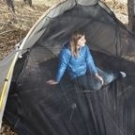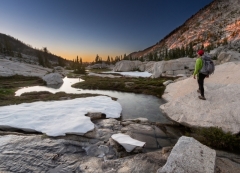
Much like your bed at home, your sleeping bag is a place where you will be spending about one-third of your time in a 24-hour period. Making sure that your sleeping bag is comfortable, warm, and appropriate for the conditions is essential for getting a quality night’s rest so you can wake up the next day ready to crank out some miles, summit a peak, or simply soak up the natural scenery without dozing off.
The good news is that there are plenty of options for high-quality sleeping bags, so
Recently I picked up a pair of superlight minimal shoes made by Vivobarefoot – The Ultra Pure. I’ve been into minimal footwear for a while now, but the Ultra Pure is definitely the simplest and lightest footwear I’ve had a chance to check out that still offers something close the feel of a real shoe. The entire shoe, including the sole, is made from EVA foam. They cut out a lot of material in the upper for ventilation and to save weight, and utilized a stretchy shock cord and cord lock lacing sy
A good night of sleep is always important – but with the physical activity that goes along with backpacking, it becomes even more important on the trail. Getting a good rest after a long hiking day will only help things the next day – whether it’s the physical challenge of a high mileage day, or even a day that tests other things like your sharpness with navigational ability. Not to mention just our general mental outlook – being tired makes everything harder.
With our at home pillow system
The past year or two I’ve become a fan of at least on occasion, heading out on a trip every now and then that involves a day or two of backpacking into the wilderness with a particular destination in mind, then staying a couple nights exploring in that area. As a backpacker who’s also a fly fisherman, a secret lake in the wilderness is often involved on these trips. In contrast to the more typical backpacking trip of packing in the miles and moving daily, these types of excursions allow you to r
For dedicated hikers and backpackers in snowy climates, snowshoes are a must-have for winter travel. After purchasing a pair of the MSR Lightning Explore snowshoes and having done several backpacking trips and numerous dayhikes with them I’ve probably accumulated around 100 miles on the snowshoes between 2 seasons, in a variety of conditions, and feel reasonably well-qualified to offer my thoughts on this piece of equipment.
The MSR Lightning Explore Snowshoes 25” Length Men’s Version
For 3-season use stove choices are simple: many of us rely on an upright canister stove – with my current favorite choice being the Soto WindMaster. For year-round utilization however and when temperatures fall in winter, and / or melting snow is one’s source of water, modifications to your stove system or a different system entirely are called for. As temperatures drop, performance of upright canister stoves begins to suffer and especially as temperatures approach or surpass the boiling point o
With a new addition to the family nearly 15 years ago, I at first held fast to my minimalist approach to backpacking, and on our first trips together we tried to make smaller shelters work. We could find a way to all fit in a 2+ person tent right? For two adults, a child, and a dog who somehow takes up twice as much space when asleep than awake those shelters worked, but without a doubt made for some of the most uncomfortable backcountry sleeping arrangements in recent memory. I learned my lesso
Like most backpackers, my cook kit usually consists of a stove, pot, spork, and mug. Sometimes I even forego the mug in a quest for simplicity and weight savings and just drink my tea and coffee out of the pot. And, inadvertently, I’ve left my spork behind once or twice and enjoyed extremely minimal and inconvenient weight savings.
However, under certain conditions, I’ve been known to expand my cook kit to include a non-stick skillet and cook up meals normally reserved for car camping
If you’re comparing specifications among commercially available light to mid-weight down parkas, one option will surely start to rise to the top of the list as you compare down fill and overall weights across the board – the Montbell Mirage. As a long-time user of their popular and lighter U.L. Down Inner series, and as a backpacker who isn’t afraid to carry a few extra ounces if the comfort trade-off is worth the weight, the Mirage is tempting option for shoulder season and winter trips, or for
One thing is for certain: we all need to keep our sleeping gear dry and we all need to be able to fit it all in our pack. Like many of us, in the past I’ve used everything from a set of individual dry bags to accomplish these goals to budget friendly trash compactor bags. All worked well and served the purpose of keeping my sleeping bag and clothing dry during rainy days on the trail while also offering some benefit in the way of compression. As a user of an inflatable Exped sleeping pad however
Aside from bear canisters, there are few – if any – pieces of gear that backpackers can be required to have. Don’t want to bring a tent? That’s your choice. Feel like skipping the stove and eating no-cook dinners? Go for it. Trust the forecast and decide to leave the rain gear at home? No big deal. The ability to choose what we bring and the multitude of options for nearly every type of gear that exists are part of the fun of planning a backpacking trip. However, for certain national parks and o
As soon as we set foot on the trail, a way to carry one of the most essential ingredients for a successful hike – water – becomes essential. With a myriad of options available from bottles of nearly every variety to dedicated, and often complex, hydration systems on the market today, when choosing a way to carry your water while backpacking the shopping experience can become complicated quickly. What follows is an overview of options that are available for this task along with my preferences, an
Tarptent offers a wide array of 1-4 person shelters that all offer a nice blend of weight and functionality, and once you’ve decided upon the best model to suit your needs one additional factor will need to be considered if you’re going with one of their double wall models (now most of their lineup) – as these models are offered with your choice of interior tent type. Mesh, solid, or partial solid interiors may be available depending on the specific model and the conditions that particular tent
While bringing along man’s best friend on our backcountry adventures comes with many advantages, especially when backpacking it also comes with an extra set of dog-specific gear. Dog food, a section of foam pad, dog jackets, bowls, leashes, and perhaps even a sleeping bag for your dog all serve to increase the weight carried. The solution of course is to have the dog carry some of their own gear or other gear to help offset some of the weight – most importantly of course without overloading the
No matter your outdoor recreation activity of choice, for most any type of winter activity in deeper snow some type of gaiter is desired to keep snow from entering through the top of your footwear and causing an uncomfortably chilly situation, or even eventually worse, predicament for your feet. Although of a shorter design I’ve been utilizing the Mountain Laurel Designs (MLD) Superlight gaiter for the past several years as my gaiter of choice anytime snow is present in shoulder seasons, and thr
As far as hiking gear goes, trekking poles are one of the most utilitarian and least flashy pieces of gear out there. Whereas sleeping bags, tents, backpacks, down jackets, and rain shells all seem to have copious amounts of energy and ink expended in marketing campaigns to promote them, trekking poles seem to have a much lower profile.
Trekking poles can help with your hiking efficiency, and can often be used for shelter setup while backpacking as well.
Trekking Poles and Backpa
I’ve always wished I could use the spare clothes in a stuff sack method to create a pillow while backpacking, but like a lot of other lightweight backpackers out there I’m usually wearing the majority of my clothes in my sleeping bag at night to increase warmth. There might be a rain jacket and pants still packed away, (Though sometimes I wear those for warmth too) but they just don’t have enough bulk to really offer much support, and I might be utilizing those in an attempt to keep my dog warm
Over the years, I’ve come to the conclusion that a one-sized fits all approach to gear simply doesn’t work for me – whether it is a mountain bike or a sleeping bag. Finally in 2015, after many years of utilizing a men’s sleeping bag (which dominate the higher end sleeping bag market) I decided to learn from my mistakes, branch out from the mold, and purchase a down sleeping bag designed specifically for women from Seattle-based manufacturer Feathered Friends, who currently offer 9 different wome
Trekking poles may be the most appreciated not required backpacking gear item you can come up with. Don’t take them and your legs do all the work, but you save weight and gear complexity. Take them and your upper body gets involved in the hike, and stability is added on rougher terrain with additional points of contact. Unlike your shelter or sleeping bag, trekking poles are without a doubt, not required for the trail. However, if you do take them, your knees will likely only thank you later.
When you inevitably find yourself getting miles in during cold and wet weather on any hiking or backpacking trip, we all of course reach for our rain gear to stay warm and dry. One item that can be overlooked however is protection for our hands: which are especially susceptible to getting chilled quickly. Of all options I’ve found a lightweight waterproof rain mitt to be the best option in these situations, which can be worn over liner gloves for a complete 3-season layering system that will kee
For three-season backpacking in most of the continental United States, a 20-degree bag is an ideal choice. When it’s warm it can be used like a quilt, when a late season or high elevation trip has a cold night or two dropping into the teens it will be adequate if not downright comfortable (especially if paired with a down jacket and thick socks), and for nights where low temperatures range in the upper 20s to low 40s it seems perfect. Although I’ve owned 30-degree bags and 15-degree bags over th
Shoes may be the most important piece of gear for hiking or backpacking. They are with us every step of the way, and we are relying on them to be steady and supportive. If we are thinking about shoes while hiking, it is usually because there is a problem. Maybe they don’t fit properly – too tight or too loose? Are they not grippy enough for rock slabs? Are my feet sore from feeling every rock on the trail?
Instead, we want to count on them to provide the right level of support and com
Combining cameras with the outdoors and taking one along to document your hiking and backpacking trips introduces a few challenges that must be overcome to take your photos quickly and easily, while still being able to maintain and keep your camera safe from the elements. On the trail, a few key points are worth the most consideration and what follows is the setup that has worked best for me on trips where the hiking is a higher priority than, or at least on equal ground priority-wise, with the
Since moving to the Lone Peak line as my 3 season hiking and backpacking shoe of choice in 2014, I’ve followed along as the shoe has matured across various versions as I’ve worn out each pair along the way. Now that it’s 2020, the latest version is all the way up to the 4.5 model that is quite different from very early versions of the Lone Peak, but very similar to more recent versions like the Lone Peak 4.0.
In fact, the new Altra Lone Peak 4.5 is so similar that after wearing out my
Few items provide as much comfort for the weight during frigid backpacking trips as dedicated down booties. Cold feet can quickly sap out any enjoyment of wonderful winter scenery and can easily discourage someone from ever attempting winter backpacking or cross-country ski touring. While down jackets can easily keep your core warm, having a full-body strategy for keeping in heat is crucial for winter trips where you’re spending a significant amount of time in camp. Down booties provide a soluti